The internet no longer appeals only to local markets. For businesses that want to reach users in different countries, multilingual websites have become an important necessity. However, many people think that creating a multilingual website simply means translating texts into different languages.
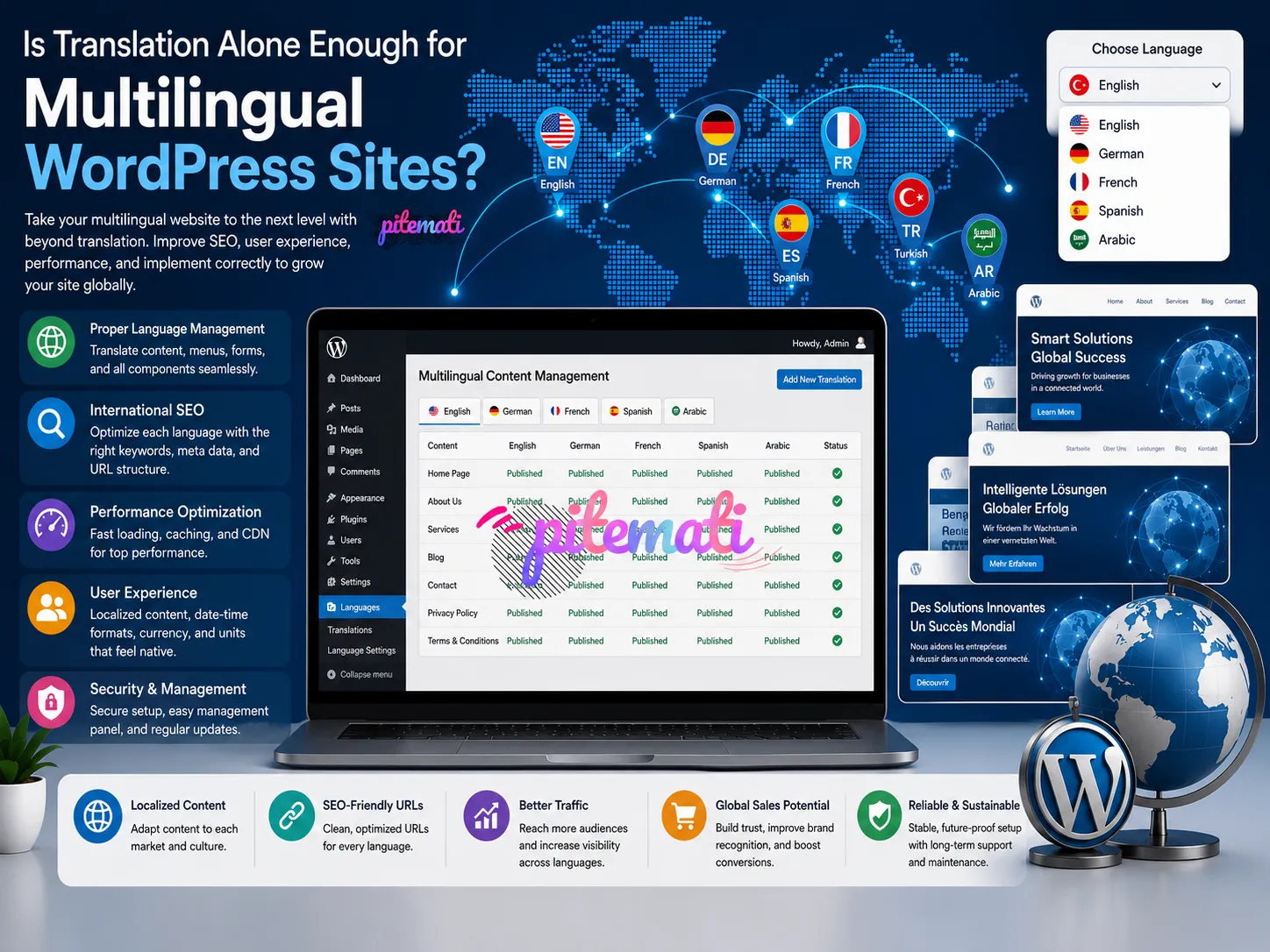
In reality, a successful multilingual WordPress website must address many different elements together, such as user experience, SEO, performance, and content management, in addition to accurate translation.
So why is translation alone not enough? Let’s take a closer look.
What Is a Multilingual Website?
A multilingual website is a web project where the same content is offered in more than one language and users can browse the site by selecting their preferred language.
Thanks to this structure, visitors from different countries can view content in their own language.
For example;
- Turkish
- English
- German
- French
- Spanish
- Arabic
and many other languages can be managed through a single WordPress infrastructure.
Translation Is the First Step
Translating content into different languages is, of course, very important.
However, translating only the text does not improve;
- user experience,
- search engine visibility,
- site performance
on its own.
For a truly successful multilingual structure, other components must also be planned correctly.
SEO Should Be Planned Separately for Each Language
Each language has different user habits.
The same keyword may not be searched in the same way in every country.
Therefore;
- page titles,
- meta descriptions,
- URL structures,
- image alt texts,
- structured data
should be optimized separately for each language.
This approach increases visibility in international search results.
Menus and Navigation
When the language is changed, not only the content but also;
- menus,
- buttons,
- category names,
- forms,
- error messages,
- search results
should also be displayed in the relevant language.
A consistent navigation experience helps visitors move around the site more comfortably.
Media and Visuals
In some cases, translating only the text is not enough.
For example;
- texts on images,
- PDF documents,
- downloadable files,
- infographics,
- promotional visuals
should also be prepared according to the target language.
This allows visitors to experience a more complete and consistent journey.
Date, Time, and Currency
International users have different formatting habits.
For example;
- date format,
- time display,
- currency,
- number format,
- measurement units
should be displayed in a way that suits the target country.
These details, although they may seem small, can significantly affect user trust.
Performance and Caching
As the number of languages increases, the number of pages also increases.
Therefore;
- caching,
- image optimization,
- CDN usage,
- database optimization
and similar performance improvements become much more important.
Fast-loading pages positively affect both user experience and SEO performance.
Ease of Management
In professional multilingual systems, being able to manage all content from a single panel provides a major advantage.
In the management screen;
- language-based content,
- pages,
- menus,
- media files,
- custom fields,
- SEO information
can be edited easily.
This approach makes content management significantly easier.
Security and Update Process
As the number of languages increases, the amount of managed content also grows.
Therefore;
- regular backups,
- user permissions,
- update controls,
- security policies
become even more important in multilingual projects.
Benefits of a Multilingual Structure
A properly planned multilingual WordPress infrastructure;
- makes it easier to reach international markets,
- improves user experience,
- increases SEO performance,
- strengthens brand credibility,
- makes content management easier,
- offers a more professional experience to customers in different countries.
Conclusion
When creating a multilingual WordPress website, translating content into different languages alone is not enough. Many components, from menus and visuals to SEO settings and performance optimization, must be planned together.
With a properly configured multilingual system, users enjoy a consistent experience in their own language, while businesses become more visible and accessible in international markets. This approach does more than offer different languages; it also helps your brand create a more professional and trustworthy impression on a global scale.